
High oil prices are expected to push up inflation to 3.9 per cent in the next three months, hardening interest rates, economic think-tank IEG has said.

'As China's reopening euphoria fizzled out on the back of some disappointing economic data, we saw inflows coming back to India with full force in the past 3-4 months.'

Many CEOs said they plan to give special leave to women employees so as to encourage their participation in the workforce.
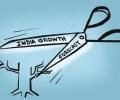
India's economy is projected to slow to 6.5 per cent in the fiscal year starting April but will remain the fastest growing major economy in the world as it fared better in dealing with the extraordinary set of challenges the globe has faced, the Economic Survey 2022-23 said on Tuesday. India's gross domestic product (GDP) growth of 6.5 per cent in 2023-24 compares with an estimated 7 per cent expansion in current fiscal year (April 2022 to March 2023) and 8.7 per cent in the previous year. Like the rest of the world, India too faced an extraordinary set of challenges in tightening financial conditions and supply chain disruptions from a prolonged war in Europe but "withstood them better than most economies", the annual document detailing the state of the economy said.

Consumer-focused companies have been left with few options but to increase the prices of their products as input costs mount because of various factors, including supply chain disruptions. This has been affecting monthly household budgets. Prices of scores of items -- from spices to soaps to rice -- have increased in the past year.
State Bank of India chairman A K Purwar said on Friday that interest rates will remain stable in the short term despite rising inflation, and may not remain soft in the medium and long term.

India, he said, has already taken a host of reforms in banking and other sectors and is now focussing on stepping up public investment. "Compared to other nations, even among advanced countries, I think India is relatively better placed for the simple reason that India paid a certain price last decade... we had a banking system stress which was then compounded by stress in the non-banking financial sector towards 2018," he said at Amazon Smbhav Summit.

India's macroeconomic fundamentals are strong to deal with global challenges and the central government is committed to sticking to the fiscal deficit target of 6.4 per cent of the GDP for the current fiscal, official sources said on Monday. The government is taking steps to deal with the spiralling crude oil prices in the international market, the sources said. India meets nearly 85 per cent of its oil demand through imports and a weaker rupee makes imports costlier.

Hardening prices of manufactured items during the month may refrain the Reserve Bank of India from cutting rates in its policy review on February 8.

There will be pressure on the fiscal situation, especially at a time when the monsoon can also disappoint. More populist expenditure is on cards if the mandate is a hung Parliament or a coalition government.

Economist Jayati Ghosh noted that the word 'freebies' indicates the class position of those who use it.

It has mostly been a one-way street for markets that have moved up sharply since July. The front-line indices - the S&P BSE Sensex and the Nifty50 - have gained 6.7 per cent and 7.3 per cent, respectively, in the past three months. The rally in mid- and small-caps has been sharper, with both indices surging 14 per cent and 9 per cent, respectively, during this period. This sharp run has made analysts at Jefferies cautious.

With Onam and Raksha Bandhan just around the corner, the festival season is ready to kick off in full swing. As people embrace the celebratory spirit, companies anticipate a surge in sales this year. Consumer durables firms are expecting strong growth of 40-50 per cent in the premium segment during the upcoming season. Appliance makers also foresee increased demand for cooling appliances - refrigerators and air conditioners - which were impacted by unseasonal rainfall.
The headline seasonally adjusted Nikkei India Composite PMI Output Index, that maps both the manufacturing and services sectors, rose from 53.3 in June to 54.1 in July.
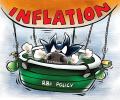
The Consumer Price Index (CPI)-based inflation is now projected to be at 5.3 per cent for 2021-22 with risks evenly balanced. In its August policy, the central bank had estimated inflation to be at 5.7 per cent due to supply side constraints, high crude oil and raw materials cost.
.jpg)
Indian economy is seeing signs of upward momentum helped by gradual reduction of inflationary pressure though the country's growth still remains "relatively weak", according to Paris-based think tank OECD.

The dates of general elections in 2019 and the presentation of the final Budget of the Modi government are so far removed from each other that Jaitley is not under any pressure to present a populist Budget. Instead, he could well unveil an array of schemes and proposals that he believes are necessary for the economy, even if a few of them could be unpopular, says A K Bhattacharya.

Strong macroeconomic headwinds causing turbulence in the $245-billion Indian IT industry are yet to calm down. Top Indian IT services companies are likely to post a decline or just marginal growth in sequential revenue in Q1FY24 because of a soft discretionary spending environment. Though the first quarter is seasonally strong for IT firms, "June 2023 will be an exception", according to analysts at Kotak Institutional Equities.

Edtech unicorn Vedantu has laid off 424 employees, about 7 per cent of its workforce, according to a blog post shared by the Bengaluru-based firm. This comes as the focus in the edtech space has shifted to profitability, according to experts. The lay-off comes days after the company fired 200 contractual and full-time employees, at a time when offline schools and colleges are opening up and learning is evolving into a more nuanced blended delivery model with a mix of online and offline.

'A weak monsoon always spells disaster. But it's too early to have a pessimistic view.'

On the Sensex chart, NTPC, SBI, UltraTech Cement, ICICI Bank, Tata Steel, Bajaj Finserv and Bjaja Finance were among the major laggards, shedding as much as 1.63 per cent.

'The consolidation of the world's fifth-largest economy in the hands of 15-20 corporate giants is a once-in-generation event, which we are focusing on.'

Salary increments in India will touch a five-year high of 9.9 per cent in 2022 as organisations are planning to invest in new-age capabilities to build a resilient workforce amid strong economic recovery and positive business sentiment, a survey said on Wednesday. According to leading global professional services firm Aon's 26th Salary Increase Survey in India, organizations across industries project a 9.9 per cent salary increase in 2022, compared to 9.3 per cent in 2021. The study that analysed data across 1,500 companies from more than 40 industries, noted that the industries with the highest projected salary increases are e-commerce and venture capital, hitech/IT and IT enabled services (ITeS) and life sciences.

Tech Mahindra was the top loser in the Sensex pack, shedding over 3 per cent, followed by NTPC, IndusInd Bank, Kotak Bank and Reliance Industries. NSE Nifty fell 185.60 points to 17,671.65.

On the Sensex chart, IndusInd Bank, SBI, Dr Reddy's, NTPC, ICICI Bank, HCL Tech and Bajaj FinServ emerged as major laggards.
Sluggish rural demand along with higher inflation is set to mute revenue growth of the fast-moving consumer goods (FMCG) sector at 7-9 per cent this fiscal and the next compared to 8.5 per cent in the previous fiscal, a report said. Almost 40 per cent of the Rs 4.7-lakh-crore sector come from the hinterland markets, which have been hit by high inflation, low wages and high job losses since the Covid pandemic. Revenue growth of the FMCG sector will be muted at 7-9 per cent this fiscal and the next compared to 8.5 per cent in the last, while volume growth will be just about 1-2 per cent, down from 2.5 per cent last fiscal, Crisil said in a report on Monday.

The government on Monday ruled out making public the RBI report detailing the reasons why the central bank could not keep inflation within the targeted 6 per cent upper limit for the three consecutive quarters. "Yes sir, RBI has furnished a report to the central government, as mandated under Section 45ZN of the RBI Act, 1934 and Regulation 7 of RBI Monetary Policy Committee and Monetary Policy process Regulations, 2016," minister of state for finance Pankaj Chaudhary said in a written reply. The said provisions of the RBI Act, 1934, and regulations therein does not provide for making the report public, he said.

Firms said subdued demand conditions, unfair pricing among competitors and economic woes affected the sector.

Rajan said that demand needs to be reduced without having severe effects on investment and supply.

The seasonally adjusted S&P Global India Manufacturing Purchasing Managers' Index (PMI) slipped from 57.5 in September to 55.5 in October, the slowest rate of expansion since February. The October PMI data pointed to an improvement in overall operating conditions for the 28th straight month.

The RBI's next policy review is set for Sept. 29.

'I would not suggest buying these stocks in the dip, as the upside in profit is dented without a safety net for a rainy day.'

Petrol price on Tuesday breached the Rs 85 a litre mark in the national capital and diesel neared record high after rates were raised for the second consecutive day. Petrol and diesel prices were hiked by 25 paise per litre each, according to a price notification from oil marketing companies. This took the petrol price in Delhi to Rs 85.20 per litre and to Rs 91.80 in Mumbai. Diesel rate climbed to Rs 75.38 a litre in the national capital - just shying away from its record high - and to an all-time high of Rs 82.13 in Mumbai, the price data showed.

India's manufacturing sector activities improved in September as companies benefited from strengthening demand conditions amid the easing of COVID-19 restrictions, a monthly survey said on Friday. The seasonally adjusted IHS Markit India Manufacturing Purchasing Managers' Index (PMI) improved from 52.3 in August to 53.7 in September, indicating a stronger expansion in overall business conditions across the sector. The September PMI data pointed to an improvement in overall operating conditions for the third straight month. In PMI parlance, a print above 50 means expansion while a score below 50 denotes contraction.

With retail inflation witnessing significant uptick in May, the Reserve Bank of India (RBI) is likely to maintain status quo in its August monetary policy review, according to a report. According to the SBI's research report- Ecowrap, inflation may remain elevated in the coming months due to several global and domestic factors. "We expect a status-quo in August. We believe RBI would still try to find a marriage of convenience of regulatory and developmental measures and monetary policy in August policy," the research report said on Wednesday.

The biggest challenge is crude oil's sustained rally - it is nearing $80 a barrel - stoking inflationary pressures and consequent price hikes in the sector.
.jpg)
Declining prices of food items like vegetables pulled down retail inflation to 5.59 per cent in July, bringing it back within the RBI's comfort zone after two months, official data showed on Thursday. The retail inflation based on the Consumer Price Index (CPI) had remained above 6 per cent during May and June. The government has mandated the RBI to maintain retail inflation at 4 per cent, with a margin of 2 per cent on either side. The CPI based inflation stood at 6.26 per cent in June 2021 and 6.73 per cent in July 2020.

Fast-moving consumer goods major Dabur India is set to enter the branded spices and seasoning category. It has signed an agreement to acquire 51 per cent in Badshah Masala for a cash consideration of Rs 587.52 crore. The acquisition, the company says, is in line with its strategic intent to expand its food biz to Rs 500 crore in three years.
The central government is on track to meet its fiscal deficit target of 6.4 per cent of the GDP for 2022-23 on the back of strong growth in revenue collections, the World Bank said in its India Development Update on Tuesday. High nominal GDP growth in the first quarter supported strong growth in revenue collection, especially Goods and Services Tax (GST), despite tax cuts on fuel. Notwithstanding an increase in spending due to expanded fertilizer subsidies and food subsidies for vulnerable households in response to the commodity price shock, the government is on track to meet its FY22/23 fiscal deficit target of 6.4 per cent of GDP and the general government deficit is projected to decline to 9.6 per cent from 10.3 per cent in FY21/22 and 13.3 per cent in FY20/21.

'India is not so distant from years of high and entrenched inflationary expectations that it should start trying to play games with the economy the way the West's central bankers think they are entitled to,' argues Mihir S Sharma.
